

Hunting Gemsbok in South Africa
A field guide to hunting gemsbok in the Eastern Cape
Gemsbok hunting is one of the best plains game hunts you can add to a South African safari. The animal is beautiful, sharp-eyed and built for rugged country. The horns are long and clean. The body is heavy through the chest and shoulder. The hunt usually asks for more from you, but the reward is a memory of a lifetime.
In our Eastern Cape terrain, gemsbok hunting gives you a good mix of open ground, ridges, bush lines, valleys and broken terrain. Here’s what you need to know about hunting gemsbok in South Africa.
Jump ahead: I want to book a hunting safari
Key takeaways
- Gemsbok, also called South African oryx, are large African antelope with long, straight horns. Both bulls and cows carry horns, so trophy judgement takes experience.
- Gemsbok are suited to dry, open and semi-open country.
- They are alert animals with good eyesight and strong survival instincts.
- Gemsbok can be added to your hunting package.
- Shot placement is important because gemsbok are heavy-bodied and can travel far after a poor hit.
- In the Eastern Cape, gemsbok hunting works well because the terrain gives you visibility, cover, slopes and natural stalking routes.
Quick read: Hunting in South Africa: FAQs
What is a gemsbok?
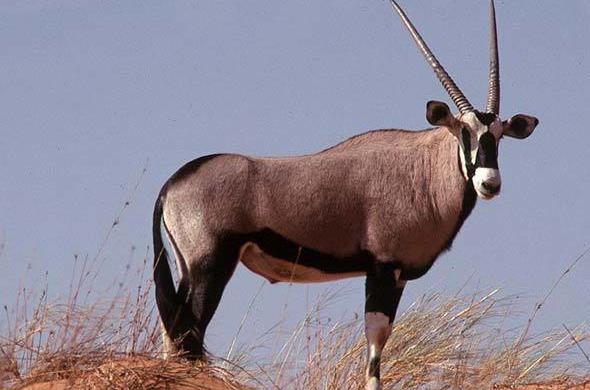
A gemsbok is a large African antelope and part of the oryx family. It is one of the most recognisable plains game animals in Southern Africa.
You can identify it by its grey body, black-and-white face markings, dark leg markings and long, straight horns. The horns are one of the main reasons hunters want gemsbok on their safari list. They are clean, striking and carried by both males and females.
A mature gemsbok is a solid animal. The chest is deep. The shoulder is strong. The body is built for dry country, heat and long movement between feeding areas and water. This is why gemsbok have a reputation for being tough plains game.
They are not dangerous game, but a wounded gemsbok can cover ground quickly, and those horns are not decoration. Follow-up work is handled with care and professionally.
Gemsbok habitat
Gemsbok do well in dry, open and semi-open country.
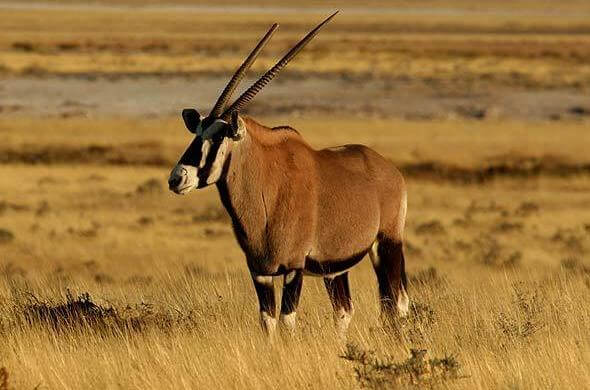
Their natural habitat includes:
- Open plains
- Dry grassland
- Semi-desert
- Kalahari-type sandveld
- Karoo country
- Sparse thornveld
- Low scrub
- Rocky ground
- Open savannah
They are comfortable in land where food is spread out, water may not be close, and visibility is long. That habitat suits their behaviour. They can feed, watch, move and keep distance from pressure.
Why hunting gemsbok at Rocklands works
Our hunting area near Fort Beaufort in the Eastern Cape gives you the right mix of terrain for an unforgettable gemsbok hunt. You have open sections where you can glass properly. You have ridges and higher ground where you can stop, look and judge animals before making a move. You have valleys, bush lines and broken slopes that let you plan a stalk without walking straight at the herd.
In flat, open country, you may see gemsbok from a long way off but have very little cover to close the distance. In thick bush, you may bump animals before you can judge them properly. Our terrain gives you a more balanced hunt. You can spot, assess, plan and stalk.
Related: Rocklands Safaris: The True Test of Your Hunting Prowess
How to hunt gemsbok
Most gemsbok hunts are done by spot-and-stalk. You start by glassing likely areas. You look across open ground, slopes, bush edges, feeding areas and movement routes. Once gemsbok are spotted, you do not rush in. You watch first.
The professional hunter checks the group. He looks at horn shape, horn length, body size, sex and maturity. He checks where the animals are standing, where they may move, and what the wind is doing.
You may walk in a wide circle to keep the wind in your favour. You may use a ridge to stay low. You may crawl the last short distance if the country is open. You may wait while animals feed, lie down, or turn into a better position. When the shot comes, it is usually from sticks. That is standard on African plains game hunts. Practise shooting from sticks before your safari. It makes a difference.
Explore: Top 10 Animals to Hunt in Africa (A Professional Hunter’s List)
Bow hunting gemsbok
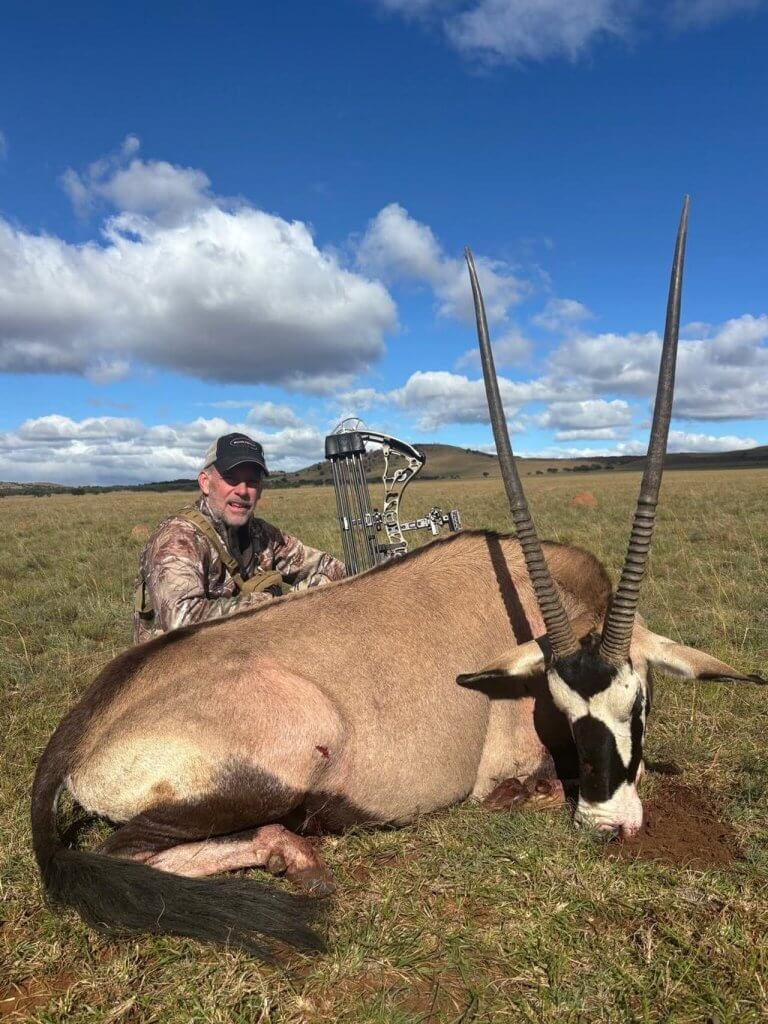
Gemsbok can also be hunted with a bow, where conditions and regulations allow.
Bow hunting gemsbok requires patience and discipline. You need the right setup, strong penetration, sharp broadheads and strict shot selection.
A broadside or slightly quartering-away shot is preferred. Poor angles should be passed. Gemsbok are alert, so bow hunters must pay close attention to movement, sound and wind. Getting close is the work. The final shot should only be taken when the animal is calm, the angle is clean and the range is right.
If you plan to bow hunt gemsbok, discuss your bow setup with us before the safari so the hunt can be planned accordingly.
Trophy judgement
Gemsbok trophy judgement is not as simple as finding the longest horns. Both bulls and cows carry horns. Cows often have longer, thinner horns. Bulls usually carry heavier bases and stronger bodies. Depending on what you are hunting for, the right animal may not be the one that first catches your eye.
Your professional hunter will look at:
- Horn length
- Horn thickness
- Horn symmetry
- Body size
- Sex
- Age
- Condition
- Position in the herd
This is where our local experience is to your advantage. A good PH will help you choose the right animal for the hunt.
Gemsbok as part of a plains game safari
Gemsbok works well as part of a mixed plains game safari.
Many hunters combine gemsbok with species such as kudu, impala, blesbok, springbok, warthog, zebra, wildebeest or other plains game species available on the hunting plan.
It is also a good species to include if you want variety in the way you hunt. Some animals may be found in thicker bush. Gemsbok often gives you more open-country hunting, more glassing and a more deliberate stalk.
That variety makes the safari better.
Explore: What to Hunt in Africa
What to expect on your gemsbok hunt
- Expect early starts.
- Expect time behind binoculars.
- Expect walking.
- Expect wind checks.
- Expect stalks that do not work.
- Expect to wait while animals feed, turn, move or settle.
- Expect your professional hunter to slow you down when needed.
- Expect to shoot from sticks.
- Expect the final decision to depend on the animal, the angle, the distance and the rest.
That is the right way to hunt gemsbok. The animal is too good to rush.
Book your gemsbok hunt
If you want a plains game hunt that tests your fieldcraft, gemsbok is a strong choice.
You will hunt in the Eastern Cape with professional hunters and trackers who know the land.
You will glass, stalk, read the wind and wait for the right shot.
Your hunting experience will create memories that will last a lifetime.
Book your gemsbok hunt today and let’s plan your South African hunting adventure.
Frequently asked questions about gemsbok hunting
What is a gemsbok?
A gemsbok is a large African antelope also known as the South African oryx. It has a grey body, black-and-white face markings and long, straight horns.
Where do gemsbok live?
Gemsbok are suited to dry, open and semi-open country. They are commonly associated with areas such as the Kalahari, Karoo, dry grassland, thornveld, scrub and semi-desert.
Can you hunt gemsbok in the Eastern Cape?
Yes. Gemsbok can be hunted in suitable Eastern Cape hunting areas where they are well managed. Our terrain gives you a good mix of open ground, slopes, valleys and bush lines for spot-and-stalk hunting.
Is gemsbok hard to hunt?
Gemsbok can be challenging. They are alert, strong and good at using open country. The hunt requires patience, careful stalking and accurate shot placement.
What is the best way to hunt gemsbok?
The most common method is spot-and-stalk. You glass likely areas, judge the animal, work the wind, use terrain for cover and take a steady shot when the angle is right.
What calibre should you use for gemsbok?
Common plains game calibres such as .270, .308, .30-06, 7mm Rem Mag and .300 Win Mag can be suitable. Use a quality controlled-expansion bullet and choose a rifle you shoot well.
Where should you aim on a gemsbok?
The preferred shot is a broadside or slightly quartering-away heart and lung shot. Aim low through the chest and tight behind the shoulder, with your professional hunter confirming the angle.
Can you bow hunt gemsbok?
Yes, where conditions and regulations allow. Bow hunting gemsbok requires the right setup, close range, strong penetration and disciplined shot selection.
Are gemsbok dangerous?
Gemsbok are not classified as dangerous game, but they must be treated with respect. A wounded animal can be dangerous at close range because of its long, sharp horns.
Why add gemsbok to a South African hunting safari?
Gemsbok gives you a strong plains game hunt, a distinctive African trophy and a different style of hunting from thicker bushveld species. It adds variety, challenge and value to a mixed safari.